
What to Expect in 2026?


Welcome to 2026! Let’s take a moment to reflect on what a year 2025 has been for sustainability. There was a definite change in the sentiment and the way sustainability is perceived. While most of the Western countries witnessed a political shift away from sustainability policies, the Eastern half continued their silent pursuit of progress.
One common thread that has emerged at the end of this year is that – ESG efforts need to be resilient in itself. They need to be pragmatic and have a positive risk-benefit ratio. For this reason, a lot of companies, investors and economies have sustained, whether they show it or not (greenhushing at its best), the brutal force of pessimism and continue on the path of sustainability that still holds merit and relevance.
A number of areas have emerged as focal points for the incoming year. Some of these are tailwinds pursuing trends in technology or sectors of investor interest, while others are headwinds pushing for change through policies or scientific evolution.
Let’s have a look at them:
TAILWINDS
A Historic Transition in the Global Energy Mix

Image Source: Ember Solar and wind supplied 17.6% of global electricity in the first three quarters of 2025, up from 15.2% over the same period last year, pushing the total share of low-carbon sources to 43%. And for the first time across a sustained period, solar and wind outpaced fossil fuels in meeting the new electricity demand, meaning that majority of the incremental demand is now being fulfilled by renewables, while the fossil fuel capacity remains mostly constant.
This is a very big shift as technologies and industries rush to adopt to this changing energy mix. There is a rise in what is called ‘Electrotech’ - a set of efficient, scalable electricity-based technologies like solar, wind, batteries, EVs and heat pumps. Battery prices, long a sticking point in the electrification of a range of products, continue to decline. Prices per kilowatt-hour of battery capacity fell by 8% to a record US$ 108 in 2025 and they’re expected to decline a further 3% in 2026, according to BloombergNEF.
With the increasing pace of adoption (even in developing countries) and rationalisation of costs (led largely by cheap Chinese clean tech), this space is ripe for disruption. Many investors are eying innovative technologies that can potentially be pioneers in the new energy decade that we are about to witness.
Climate tech gets popular – some technologies more popular than the others

Global investment in clean tech far outpaced what went into polluting industries. For every US$ 1 funding fossil fuel projects, US$ 2 went into clean power, according to the ECIU. For China, the EU, the US and India, the four largest polluters, it was US$ 2.60.
Besides electrotech, few sub-sectors have emerged to be the new areas of interests, namely, climate adaptation and nuclear fusion power.
As you will see later in this article, climate change has started showing its colours and fuelled, if not instigated, numerous natural catastrophes in 2025, be it heatwaves, wildfires or hurricanes. Resultantly, there's a growing appetite for funding adaptation projects, both in the public and private sector. From building fire-resistant infrastructure to using weather resilient agro-variants, adaptation projects have become more wide-scaled and economically sensible given the frequency and magnitude of impact natural catastrophes could have on our society.
Nuclear startups received about a fifth of all climate venture funding during the first nine months of 2025, according to BloombergNEF, and publicly-traded nuclear firms enjoyed a stock rally, driven in large part by the technology’s promise to meet AI energy demand. Some of the largest climate tech investors remain committed to the sector, particularly fusion. Tech billionaire Chris Sacca’s venture firm is raising a new fund earmarked for nuclear fusion. Swaminathan from Khosla Ventures said that his team will also “double down” on nuclear investment in 2026. So yes, fusion power is likely to rise in the coming year.
We would like to add one more space which presents a massive opportunity – transformers. With the soaring demand for power in data centers, the expansion of renewable energy grid connections, and the explosive growth in energy storage, there is a real shortage of transformers in the market. Compared with traditional thermal and hydroelectric power, photovoltaic and wind power require more transformers. Because the transmission distances are long, and power needs be stepped up multiple times before grid connection, the number of transformers needed increases even further. Numerous manufacturers and sellers have already reported orders piling up as they enter 2026, showing that the demand seems to far outpace the supply at this moment.
Rise of Green Finance and Special Financing Instruments:

The markets have already seen many new sustainability-based instruments such as green bonds, sustainability-linked schemes, sovereign green bonds, green REITs, debt for nature swaps, amongst others. But we would like to focus on two instruments that are likely to be very popular in 2026: Catastrophe Bonds (Cat Bonds) and Parametric Insurance.
Catastrohphe Bonds are high-yield debt instruments that transfer the financial risk of specific natural disasters—such as hurricanes, earthquakes, and wildfires—from an issuer to investors. These insurance-linked securities (ILS) are an alternative to traditional reinsurance. Though not prevalent in most of the developing countries, including India, the rising risks have sparked discussions amongst global policy makers to take this seriously.
Artemis (a specialist in insurance-linked securities) reported that there was roughly US$ 60 billion outstanding in catastrophe bonds in 2025, with a record US$ 23 billion bounce compared to the previous year. As natural disasters become a more regular occurrence, insurers and utilities are increasingly looking for ways to offload their risk to capital markets. And with improvements in modelling capacity, fund managers are now encouraged to move into a “once untouchable” risk category.
Another rising instrument is parametric insurance. If you have been tracking our newsletters, we did mention about the rise of this instrument in Asia. Parametric insurance is a type of insurance that pays out a pre-agreed, fixed amount automatically when a specific, predefined event occurs, say a natural disaster, or temperatures exceeding a threshold that would reduce productivity or impede labour activity. According to Research Nester, the parametric insurance market was sized at over US$ 18.94 bn in 2025 and is growing at roughly 9.7% CAGR.
HEADWINDS
Navigating regulatory changes – CBAM, CCTS & Other Policy Changes

Image Source: Energy Monitor 2025 saw a lot of the regulations weakening, and this streak might continue. However, 2026 is also set to witness some new regulations. The most significant one being the Carbon Border Adjustment Mechanism (CBAM) which came into force on January 01, 2026. CBAM obligates importers (and effectively the exporting entities) of cement, electricity, iron and steel, aluminium, fertilisers, and hydrogen, to pay for embedded emissions linked to the EU’s carbon price.
India has also introduced the Carbon Credit Trading Scheme (CCTS), expected to be implemented in mid-2026, that would require companies in nine carbon intensive sectors to buy carbon credits if they exceed baseline emissions. The implementation of this scheme will not necessarily reduce costs for the entities covered in CBAM, but will ensure that the carbon price is paid in India and not outside. The government has already notified baseline emissions for obligated entities, however the scheme is yet to be implemented.
Other industry specific policies are also expected to rationalise. With the US lifting EV subsidies altogether, India too has reduced the subsidies as it transitioned from FAME II to the new PM E-Drive scheme. The later is largely grounded on improving sales volumes, economics and consumer acceptability to this segment. Schemes in sectors like hydrogen and Carbon Capture, Utilisation and Storage (CCSU) also remain in focus.
Increasing pace of climate catastrophes
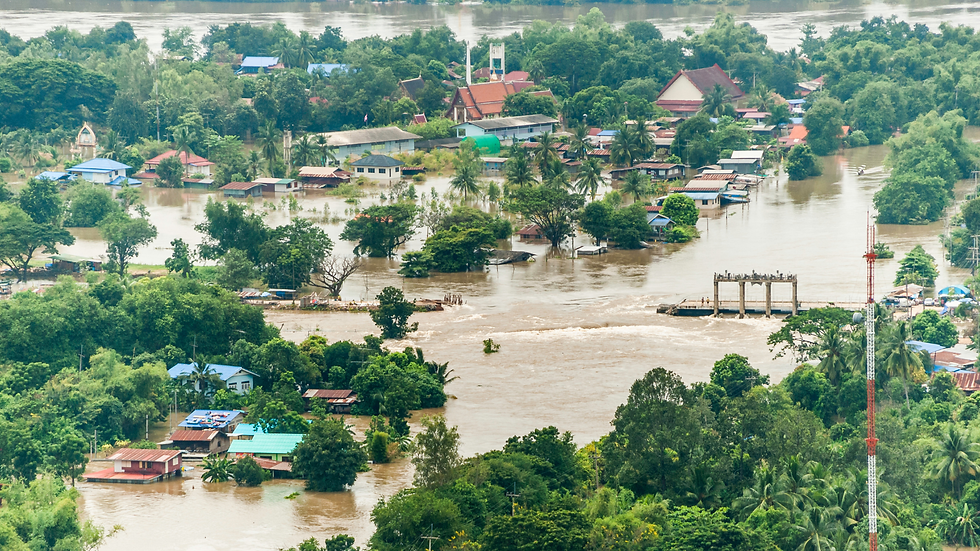
2025 was one of the costliest years for climate disasters. The list of top-10 disasters includes wildfires, cyclones, extreme rainfall and flooding, and droughts spanning four continents. Together, they resulted in economic losses of US$ 120 billion.
Scientists have warned that nations need to cut carbon emissions by nearly 50% by 2030 to stave off 1.5°C temperature rise. And the world is woefully off track to meet this target and risks further backsliding. This is concerning. With accelerating global temperatures, increase in wind speeds and air moisture and rising sea levels and ocean water temperatures, 2026 too is likely to witness some reaction to this human induced climate change.
Building resilience, despite impact of ESG backlash in the West

Besides the general exodus of climate policies through executive orders, the Trump administration also exercised hard and soft power through concerted campaigns against the sustainability policies of both enterprises and financial institutions. Republican-led states passed laws against “ESG investing’ and pulled state funds from asset managers, prompting many to back away from their climate commitments. Many left groups like ClimateAction 100+, the Net Zero Banking Alliance (NZBA), and Net Zero Asset Managers (NZAM).
However, a Harvard study found that, and we quote:
“The story of mass corporate retreat from sustainability is largely a mirage. Yes, a handful of high-profile withdrawals have dominated news cycles, but in reality, only 8% of companies have materially rolled back their commitments, and another 5% have altered their public messaging while keeping their programs intact. The far bigger story is that 53% are holding steady and 32% are expanding their efforts.”
So yes, perception matters. But reality prevails. With or without PR, companies must continue to build resilience, and adopt sustainable practices that are beneficial for the company and its stakeholders.
SOMEWHERE IN THE MIDDLE
Role of AI – in leading and hurting sustainability goals

We couldn’t come to terms to classify AI as a headwind or tailwind – because it’s both.
Here are the arguments on both sides of the case:
AI has shown some great benefits – it is enabling new climate solutions and expediting scientific research, from sustainable materials to protecting biodiversity. Machine learning techniques have helped scientists translate their global models into regional impacts for at least 15 years. But advances in computing have further improved their ability to model the future — albeit still imperfect — including how society responds to disaster.
On the reporting front too, companies have found AI models as a useful tool to gather, anaylse, draft and communicate sustainability-based information with the stakeholders. Google even released an ‘AI Playbook’ for reporting, sharing sample prompts and responses that could be used in its AI tools.
However, the technology has cost us a lot, beyond its financial outlay. Goldman Sachs Research forecasts that global power demand from data centers will increase by 50% by 2027 and by as much as 165% by the end of the decade (compared with 2023). Though, Chinese company DeepSeek’s more efficient models have questioned these power demand projections, the demand of power for computing has only increased. Adding to this, data centers are consuming exorbitantly large amounts of water, in many cases fresh water, for cooling purposes.
So yes, it’s a double-edged sword.
As we wrap this newsletter, we hope that this new year makes this world more liveable, more inclusive and more secure. Here’s wishing you a very Happy 2026!🎆


Comments